- 12/12/2025
WORLD UNIVERSAL HEALTH COVERAGE DAY – 12 DECEMBER 2025
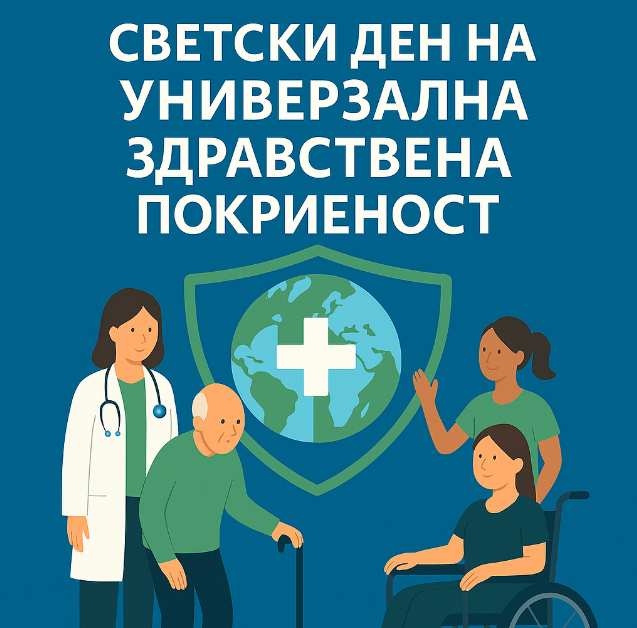
World Universal Health Coverage Day 2025 draws attention to the heavy burden and serious consequences of inaccessible and unaffordable health services, both for individuals and communities. Despite numerous political commitments and international declarations aiming to achieve universal health coverage (UHC) by 2030, the reality remains concerning: more than half of the world’s population still lacks access to basic health services. Additionally, one in four people faces financial hardship when paying for health services out of pocket, often forcing a choice between health care and other essential needs such as food, housing, or education.
Universal health coverage is not merely a health policy—it is a prerequisite for sustainable development and social stability. Healthier populations are more resilient to crises, more productive, and more successful. When people avoid or delay using health services due to high costs, it results in worsening health, increased disease burden, and long-term economic consequences for families and communities.
In this context, the World Health Organization calls for urgent action: strengthening financial protection measures, reducing and gradually eliminating direct payments for health services, and ensuring equitable access for the most vulnerable groups—low-income populations, people with chronic illnesses, and those facing various forms of social vulnerability.
Thus, Universal Health Coverage Day serves as a global mobilization point, reminding governments that declarations must be translated into real policies, actions, and investments. This year’s slogan, “High health costs? Enough!”, reflects growing concern and frustration among people worldwide facing these challenges. For millions of families, this represents a daily reality that deepens poverty and exacerbates social inequalities. The day reminds us that behind every statistic is a human life, and that health is a right, not a privilege.
Inaccessible health services force families to choose between medical care and other basic life necessities, leaving lasting consequences—from reduced productivity to impaired social and economic stability. Conversely, investing in universal health coverage, particularly through strengthened primary health care, leads to better health outcomes, greater social cohesion, and reduced inequalities.
Situation in the Republic of North Macedonia
The health system in North Macedonia provides a relatively comprehensive basic package of services, with mandatory health insurance covering over 90% of the population. This represents a strong foundation for progress toward universal health coverage.
Although a large portion of primary care services is free of charge, co-payments for specialist consultations, hospital care, and medications remain a barrier to accessing health services. Over the past decade, there has been a decrease in unmet health needs due to financial reasons, but they remain high among low-income populations. Meanwhile, the “My Term” digital system has greatly improved the efficiency of scheduling consultations and diagnostic services, yet its role in primary health care could be further strengthened to ensure greater access and continuity of care.
In addition to financial barriers, the country faces significant structural challenges: declining child immunization rates, reduced life expectancy due to the pandemic, a high burden of non-communicable diseases, high smoking prevalence, as well as migration and aging of health care workers. These factors further complicate the provision of equitable, accessible, and quality health care for all citizens.
Call for joint action
Joint action, coordination, and understanding of local needs are essential to achieving universal health coverage. Everyone has a role in creating meaningful change—institutions, communities, and citizens alike. Only through united action can universal health coverage become a reality for all.
Let this day serve as an incentive for all leaders to place health equity at the center of national policies. Universal health coverage means access to health services for everyone, regardless of income, place of residence, social status, or health condition. Progress toward universal health coverage is therefore progress toward fairer, more inclusive, and more resilient societies that leave no one behind.